
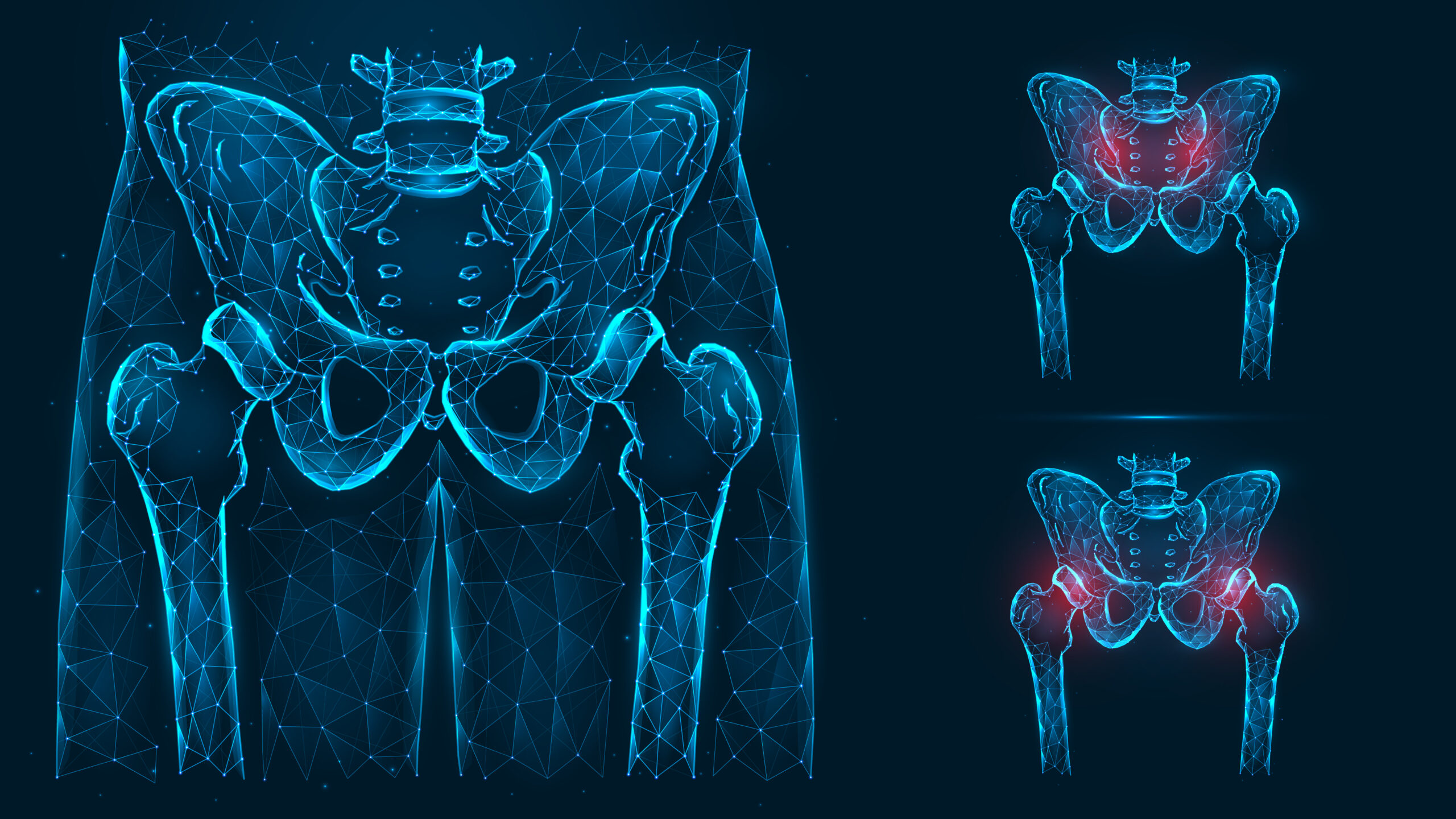
Hip joint problems can significantly limit mobility, independence, and overall quality of life. When conservative treatments such as medications, physiotherapy, and lifestyle modification fail, surgical intervention becomes necessary. Total hip replacement and bipolar hip replacement are the most commonly recommended procedures.
Both surgeries aim to restore movement and reduce discomfort, but they differ in technique, patient suitability, and long-term expectations. Understanding these differences is essential before making an informed decision.
Total hip replacement is also called total hip arthroplasty. It is a surgical procedure in which both the femoral head (ball) and the acetabulum (socket) are replaced with artificial implants. This procedure is typically recommended when the entire hip joint is affected by arthritis or degeneration.
During hip joint replacement surgery:
Complete hip replacement is commonly advised for patients with advanced osteoarthritis, rheumatoid arthritis, or severe degenerative joint disease. Because both sides of the joint are replaced, it provides long-term pain relief and improved mobility when the entire joint is compromised.
There are several types of full hip replacement. Each of them is designed to suit different patient needs and bone conditions. Here are a few options to understand which may be suitable for you.
The implant is fixed to the bone using surgical cement, which is often preferred for older patients with weaker bones.
The implant is press-fitted, allowing natural bone growth to stabilize it over time, and is usually chosen for younger or more active individuals.
A combination of cemented and uncemented components to balance stability and bone integration.
Both the ball and socket liners are made of ceramic, reducing wear for patients who require long-term durability.

A bipolar hemiarthroplasty is a bipolar hip replacement where only the femoral head is replaced, and the natural acetabulum is retained. The implant is articulated on two surfaces, through which it moves both in the prosthesis and against the natural socket.
This is the most commonly performed procedure on patients who have fractured their neck of the femur in late adulthood or those with healthy socket cartilage. A bipolar hip replacement is less invasive than a full hip replacement because it can replace only the ball, and it is also associated with a relatively short operation time.
Bipolar hemiarthroplasty comes in different designs and fixation methods. The following section explains each type and its specific benefits.
A cemented bipolar prosthesis uses surgical cement to secure the implant, typically chosen for elderly patients with lower bone density.
It relies on natural bone growth for fixation and long-term stability.
The modular bipolar prosthesis allows intraoperative adjustments in head size and neck length to ensure better alignment and motion range.
Although both procedures restore hip function, their indications and long-term considerations differ:
A complete hip replacement is better if:
Bipolar hemiarthroplasty is a better choice if:
In other younger fracture cases, bipolar replacement may subsequently be changed into a total hip replacement in case the socket wears out. To illustrate, when an older patient first obtains a bipolar hemiarthroplasty during the trauma and later progresses to acetabular erosion, changing to total hip arthroplasty will help him to maintain long-term mobility.
Both procedures are safe when performed by an experienced orthopedic surgeon, but their risks differ:
Careful patient selection and precise surgical planning minimize complications in both procedures.
Recovery depends on age, overall health, and surgical approach. In both surgeries:
Patients generally regain the ability to walk independently, climb stairs, and perform routine daily activities. Specific concerns, like driving, floor sitting, or posture during prayer, should be discussed individually.
Choosing between total hip joint replacement and bipolar hip replacement is a clinical decision that requires individualized assessment. Factors such as age, bone quality, fracture pattern, comorbidities, and long-term activity goals must all be evaluated.
At Omar Hospital, patients receive a comprehensive orthopedic evaluation to determine the most suitable surgical option. Careful treatment planning, appropriate implant selection, and structured postoperative care help support safe recovery and improved mobility.
Both total hip replacement and bipolar hip replacement provide effective solutions for hip joint disorders. The correct choice depends on the underlying cause: arthritis typically favors full hip replacement, whereas isolated fractures in selected patients may be treated with bipolar hemiarthroplasty.
Choosing the right procedure is not a one-size-fits-all decision. Factors such as age, activity level, bone quality, and overall health must be carefully considered to ensure the best long-term outcomes.
Omar Hospital provides comprehensive orthopedic assessment, state-of-the-art surgical treatment, and personalized rehabilitation programs for patients planning for hip replacement surgery. The orthopedic team will assess each patient’s individual condition, lifestyle, mobility goals, and overall health to determine the best procedure and support the best possible recovery.
Yes. A bipolar hip replacement can be converted to a hip-joint replacement if socket wear develops over time after the initial bipolar replacement.
Both complete hip replacement and bipolar hip replacement are safe when appropriately indicated and performed by an experienced orthopedic surgeon in Lahore.
For elderly patients with fracture issues, bipolar hemiarthroplasty is usually preferred if the acetabulum is healthy.
The cost of each procedure depends on implant type, hospital stay, and clinical complexity. For personalized information about treatment options and estimated costs, contact Omar Hospital.