
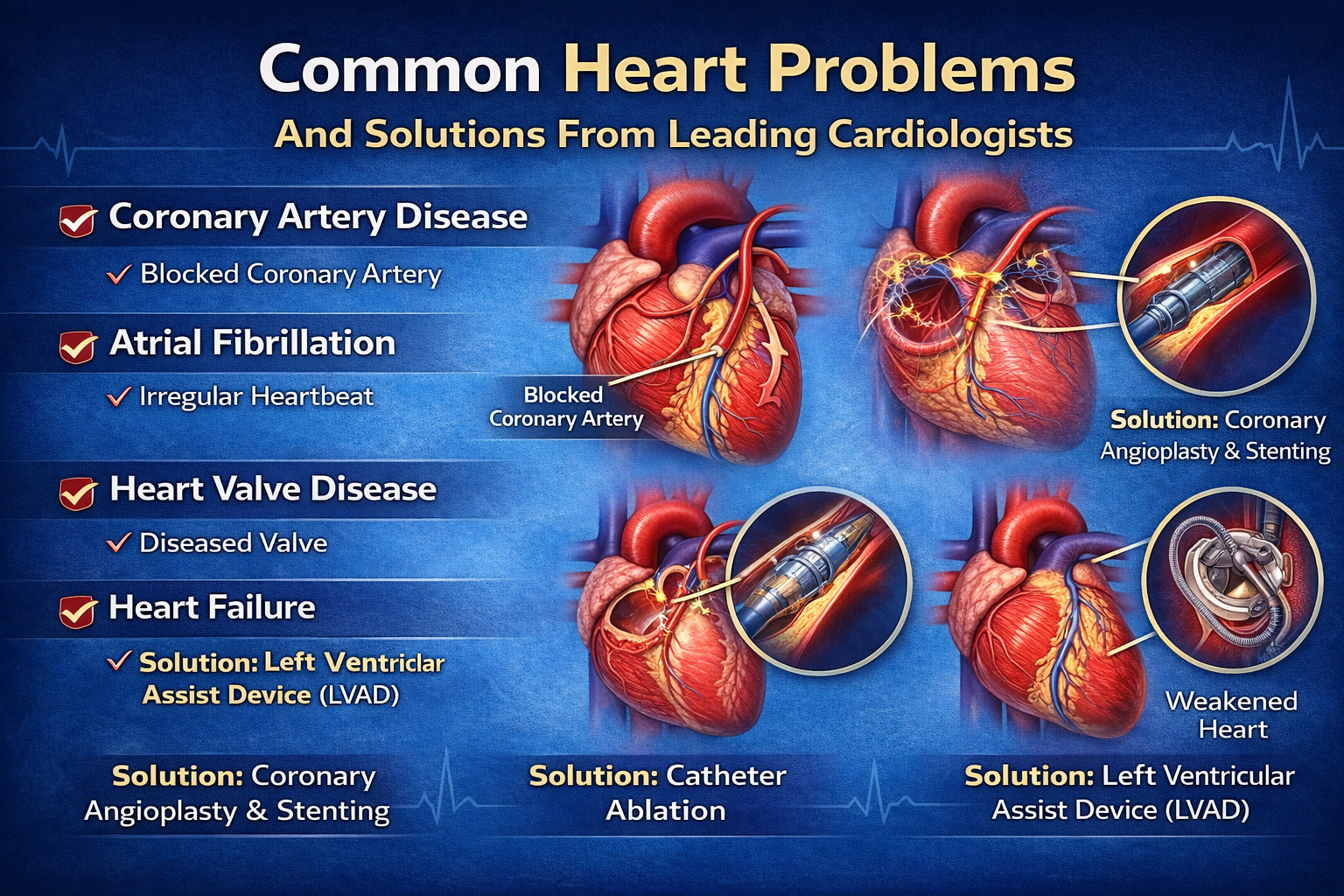
Heart problems are among the most common health concerns worldwide. They range from mild irregularities to serious conditions that can impact your daily life. Understanding common heart diseases, symptoms, causes, and the solutions recommended by experienced heart specialists in Lahore can help you take control of your heart health.
In this guide, we explore how leading cardiologists diagnose, treat, and help prevent heart problems.
Heart problems include a range of conditions that affect the heart and heart arteries. The most common is coronary artery disease (CAD), where plaque buildup narrows the arteries, reducing blood flow and increasing the risk of a heart attack.
Other common heart problems include:
Each type of heart problem affects the body differently, and treatment options depend on the specific condition. Early intervention by a heart specialist in Lahore can help manage symptoms effectively and prevent serious complications.
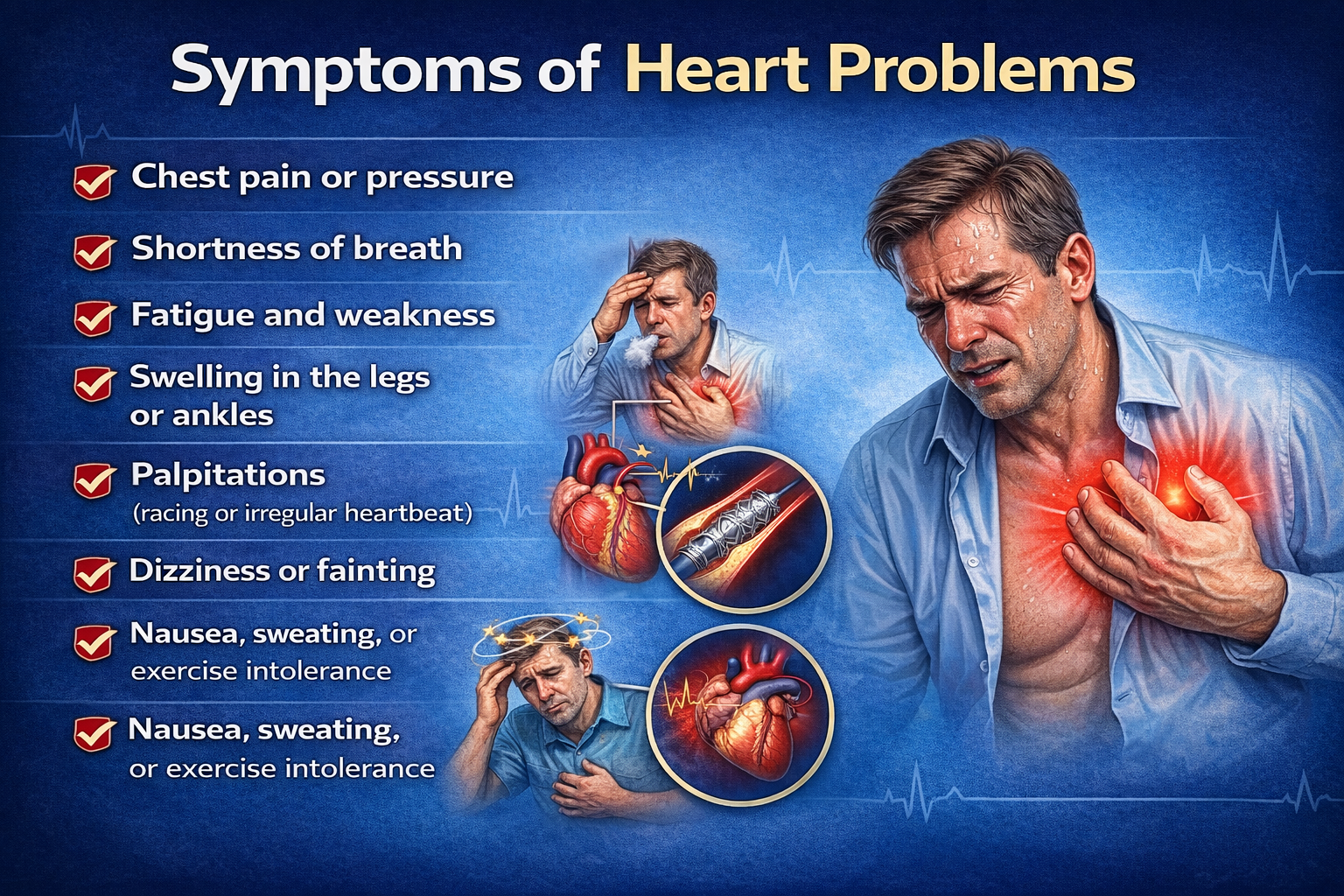
Heart problems can present in many ways, and recognizing early signs is crucial for timely treatment. Understanding the underlying causes helps prevent complications and guide effective care.
Symptoms vary based on the condition but often include:
Recognizing these signs early and consulting a cardiovascular doctor can prevent further complications.
Heart problems can be caused by a combination of lifestyle, genetic, and medical factors:
Diagnosing heart problems requires a thorough evaluation by a heart specialist. This often includes:
Early and accurate diagnosis ensures timely treatment and better outcomes.
Treatment for heart problems depends on the type and severity of the condition. Leading heart specialists in Lahore recommend a combination of lifestyle changes, medication, and procedures.
For more severe cases, procedures may be necessary:
These treatments aim to restore proper blood flow, repair damaged heart structures, and improve overall heart function.
Recovery time depends on the type of treatment or procedure:
Following your heart specialist’s guidance—including medications, lifestyle changes, and follow-up appointments—is critical to achieving the best outcomes. Early diagnosis and treatment increase the likelihood of full recovery, allowing many patients to live active and healthy lives.
Preventing heart problems involves proactive lifestyle choices and regular medical check-ups. Tips include:
Even if you have unavoidable risk factors, lifestyle modifications and expert care can significantly reduce complications.
Heart problems are common but manageable with timely intervention and expert care. Consulting a leading heart specialist at Omar Hospital & Cardiac Centre in Lahore ensures accurate diagnosis, effective treatment, and ongoing support. Combining medical care with healthy lifestyle choices offers the best chance to maintain a strong and healthy heart for life.